Discover the secrets to building a fine wine collection with these key steps. Opt for personal cellars or compressor-based wine fridges for storage but maintain a consistent cool and damp environment. Strategically select wines by considering resale value, aging potential, vineyard reputation, and expert reviews. Follow cellaring guidelines with ideal temperature and humidity settings based on each wine's aging potential. Regularly check your collection, organize, rotate bottles, and track inventory for best care. Safeguard authenticity by documenting purchases and utilizing tracking systems. Elevate your wine experience by mastering storage, selection, cellaring, maintenance, and more to refine your collection further.
Essential Storage Options
When building a fine wine collection, selecting the appropriate storage option is essential to maintaining the quality and aging potential of your wines. Personal cellars provide a traditional and customizable solution, allowing for complete control over storage conditions.
Alternatively, compressor-based wine fridges offer a convenient option for those without cellar space, though they require periodic servicing to guarantee proper functionality. Professional storage is also available but can be a more expensive choice.
Regardless of the option chosen, it is vital to maintain a consistent cold and damp environment, with temperatures around 52 ℉ / 11 ℃ and 75% humidity. Poor storage conditions can lead to rapid degradation of your valuable wine collection.
Strategic Wine Selection
Strategically selecting wines for your collection involves meticulous consideration of personal taste preferences, vineyard reputation, aging potential, and critical reviews to curate a diverse and high-quality assortment.
- Wine Investment: Research market trends and potential resale value.
- Aging Potential: Evaluate how well the wine will develop over time.
- Vineyard Reputation: Choose wines from renowned and consistent producers.
- Critical Reviews: Consider expert opinions and ratings for guidance.
- Diverse Assortment: Include a variety of styles, regions, and grape varietals for a well-rounded collection.
Cellaring Guidelines
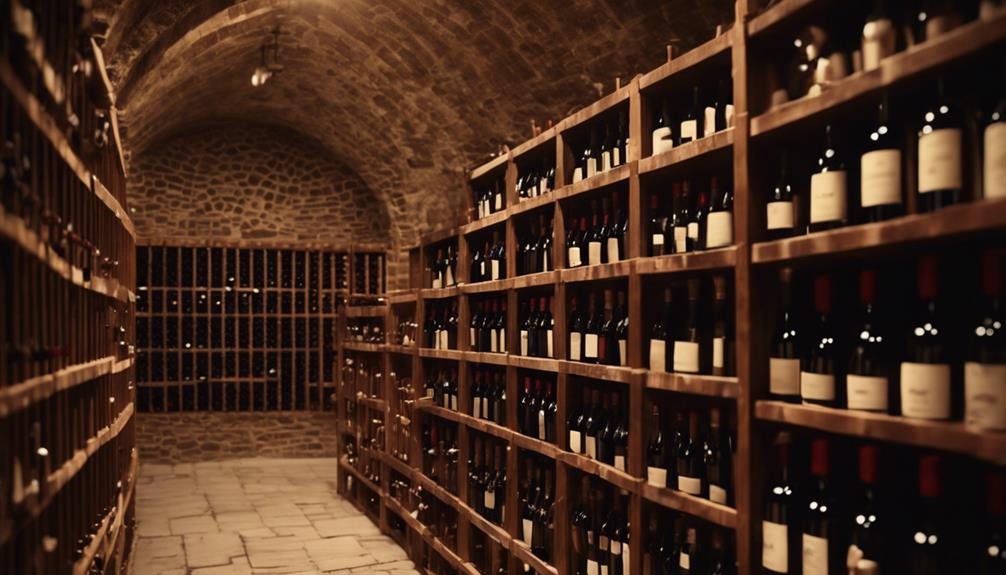
Establishing an ideal cellar environment is vital for preserving and enhancing the quality of your wine collection. Maintaining an ideal temperature of 52 ℉ / 11 ℃ and 75% humidity is essential for allowing wines to age gracefully and reach their full potential. Understanding the aging potential of each wine in your collection is key to determining how long to cellar them.
Different types of wines have varying cellar rotation periods, with Chardonnay-based wines typically aging well for around 10 years, Nebbiolo wines for 20 years or more, and Vintage Port and Madeira having the potential to mature for at least a century.
Regular Collection Check-ups
Regular assessment of your wine collection is essential to guarantee its quality and alignment with your evolving preferences and knowledge. To make sure your collection stays in top condition and continues to meet your expectations, consider the following check-up practices:
- Regularly taste wines to stay informed about tasting trends.
- Organize your cellar to easily access and manage your collection.
- Keep track of aging potential and drinking windows for each wine.
- Rotate through bottles to prevent any from aging past their prime.
- Use cellar tracking systems to maintain an accurate inventory and monitor the status of your wines effectively.
Authenticity and Tracking Systems
Maintaining the authenticity of your wine collection and implementing efficient tracking systems are fundamental pillars in ensuring the credibility and value of your investment.
Provenance verification, documenting wine purchase, shipping details, and storage conditions, is essential for establishing a wine's history and credibility. Building a provenance paper trail enhances transparency and authenticity.
Utilizing cellar tracking systems for inventory management enables you to monitor your collection effectively. By collecting and saving stories and histories of wines, you enrich the context and value of each bottle.
Tracking wines with a barcode scanner simplifies identification and organization. These practices not only safeguard the integrity of your collection but also contribute to its long-term value and enjoyment.
Frequently Asked Questions
How Can I Ensure My Wine Collection Reflects My Evolving Taste Preferences?
To guarantee your wine collection reflects evolving taste preferences, periodically re-evaluate wines. Explore new varietals that resonate with your palate. Personalized pairings enhance enjoyment. Incorporate bottles that align with changing preferences for a curated and satisfying collection.
What Are Some Tips for Efficiently Organizing and Cataloging a Wine Collection?
Efficiently organizing and cataloging a wine collection involves meticulous cellar management and utilizing virtual cellar tracking software. Establish a systematic arrangement based on wine types, vintages, and drinking windows. Maintain detailed records for easy access and tracking.
Is It Necessary to Consult a Sommelier When Curating a Wine Collection?
Consulting a sommelier for wine investment and cellar management is akin to hiring a seasoned guide for a complex journey. Their expertise guarantees wise choices, ideal storage conditions, and enhances the value and enjoyment of your wine collection.
How Can I Incorporate Rare or Limited Edition Bottles Into My Collection?
Incorporating rare or limited edition bottles into your wine collection can enhance its exclusivity and investment potential. Seek access to exclusive events for procurement, consider gifting options, engage in auction bidding for prized bottles, and guarantee proper storage for long-term appreciation.
Are There Any Unique Ways to Display and Showcase a Wine Collection at Home?
When considering creative displays and innovative showcases for a wine collection at home, explore artistic arrangements and stylish presentations. Utilize unique shelving, lighting, and decor to showcase your wines, creating a visually appealing and sophisticated display.
Conclusion
To sum up, research has shown that only about 1% of wines produced globally are suitable for long-term cellaring, making the process of building a fine wine collection a meticulous and rewarding endeavor.
By following the essential storage options, strategic wine selection, cellaring guidelines, regular collection check-ups, and authenticity and tracking systems outlined in this article, wine enthusiasts can enhance their understanding and enjoyment of the world of fine wines.